

Monarch Butterfly
Latin name: Danaus Plexippus,Conservsation status: vulnerable (population is decreasing)
Millions of Monarch butterflies migrate up to 3,000 miles each winter, farther than any other butterfly—travelling 50 to 100 miles a day. The Monarch can smell its mate from 5 miles away.
The annual North American migration of the Monarch is listed as a "threatened phenomenon." Climate related threats include: drought, storms, changes in precipitation and dependence on temperature to trigger migration and reproduction. The Monarch feeds and lays eggs exclusively on milkweed plants, so it is also highly vulnerable to herbicides and habitat destruction.
Other animals at risk

Ringed Seal
All populations of Ringed Seals are expected to be adversely affected by climate change because of dependence on sea ice and snow dens for breeding, protecting pups, moulting and resting. Early warming causes pups to separate prematurely from their mothers. As sea ice declines, other threats are fisheries by-catch, increased shipping, tourism and development. Seals are vulnerable to disease from heavy concentrations of pollutants that have accumulated in the Arctic food web.
All populations of Ringed Seals are expected to be adversely affected by climate change because of dependence on sea ice and snow dens for breeding, protecting pups, moulting and resting. Early warming causes pups to separate prematurely from their mothers. As sea ice declines, other threats are fisheries by-catch, increased shipping, tourism and development. Seals are vulnerable to disease from heavy concentrations of pollutants that have accumulated in the Arctic food web.
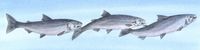
Sockeye Salmon
For decades wild salmon populations have been in decline from human causes: over fishing; habitat degradation—logging, mining, agriculture and dams; pollution; and interaction with hatchery or farmed salmon. These conditions and threats may hinder their ability to adapt to the effects of climate change. Salmon thrive at specific freshwater temperatures—warming air raises water temperature. Early snow melt and increased rains cause physical changes to spawning streams.
For decades wild salmon populations have been in decline from human causes: over fishing; habitat degradation—logging, mining, agriculture and dams; pollution; and interaction with hatchery or farmed salmon. These conditions and threats may hinder their ability to adapt to the effects of climate change. Salmon thrive at specific freshwater temperatures—warming air raises water temperature. Early snow melt and increased rains cause physical changes to spawning streams.
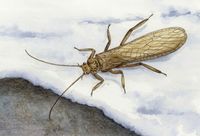
Western Glacier Stonefly
Since 1960, the average summer temperature in Glacier National Park has increased by around 1 °C and glaciers have declined by 35%. By counting Stoneflies, scientists can determine how quickly glaciers are melting and the temperature of streams. In a two year search begun in 2011, scientists found the Stonefly in only one of the six streams it had previously occupied and discovered that it had retreated to two different streams at higher altitudes. Satellite data confirm that the world’s glaciers are declining, affecting the availability of fresh water for humans, animals and plants, and contributing to sea level rise.
Since 1960, the average summer temperature in Glacier National Park has increased by around 1 °C and glaciers have declined by 35%. By counting Stoneflies, scientists can determine how quickly glaciers are melting and the temperature of streams. In a two year search begun in 2011, scientists found the Stonefly in only one of the six streams it had previously occupied and discovered that it had retreated to two different streams at higher altitudes. Satellite data confirm that the world’s glaciers are declining, affecting the availability of fresh water for humans, animals and plants, and contributing to sea level rise.
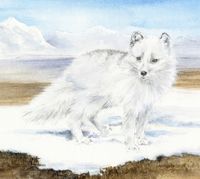
Arctic Fox
The Arctic tundra is a region of shrubs, grasses and permanently frozen subsoil. Warming could change the tundra to boreal forest—habitat for the Red Fox. The Red Fox, a predator and a competitor for food, is already beginning to migrate north into the Arctic Fox's territory. Milder tundra weather also causes changes in the population of lemmings and rodents—main food for the Arctic Fox.
The Arctic tundra is a region of shrubs, grasses and permanently frozen subsoil. Warming could change the tundra to boreal forest—habitat for the Red Fox. The Red Fox, a predator and a competitor for food, is already beginning to migrate north into the Arctic Fox's territory. Milder tundra weather also causes changes in the population of lemmings and rodents—main food for the Arctic Fox.
The Monarch Butterfly is at risk from climate change because of:The Monarch Butterfly is also threatened by: