

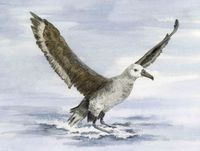
Black-footed Albatross
Latin name: Phoebastria Nigripes,Conservsation status: near threatened (population is increasing)
The Black-Footed Albatross lives up to 60 years and may travel thousands of miles in a lifetime, using a specialized gliding technique that saves muscle and energy. It is able to smell food across vast expanses of ocean. Mates court for two years and pair for life.
Almost all Black Footed Albatrosses live in the Hawaiian Islands. Like all species of albatrosses that breed on low lying beaches and slopes, they are highly susceptible to sudden flooding from sea level rise and storm surges. Thousands each year are caught by longline fishing and they are also threatened by pollution and ingesting plastics that float in the ocean.
Other animals at risk

Ringed Seal
All populations of Ringed Seals are expected to be adversely affected by climate change because of dependence on sea ice and snow dens for breeding, protecting pups, moulting and resting. Early warming causes pups to separate prematurely from their mothers. As sea ice declines, other threats are fisheries by-catch, increased shipping, tourism and development. Seals are vulnerable to disease from heavy concentrations of pollutants that have accumulated in the Arctic food web.
All populations of Ringed Seals are expected to be adversely affected by climate change because of dependence on sea ice and snow dens for breeding, protecting pups, moulting and resting. Early warming causes pups to separate prematurely from their mothers. As sea ice declines, other threats are fisheries by-catch, increased shipping, tourism and development. Seals are vulnerable to disease from heavy concentrations of pollutants that have accumulated in the Arctic food web.
Black-footed Albatross
Almost all Black Footed Albatrosses live in the Hawaiian Islands. Like all species of albatrosses that breed on low lying beaches and slopes, they are highly susceptible to sudden flooding from sea level rise and storm surges. Thousands each year are caught by longline fishing and they are also threatened by pollution and ingesting plastics that float in the ocean.
Almost all Black Footed Albatrosses live in the Hawaiian Islands. Like all species of albatrosses that breed on low lying beaches and slopes, they are highly susceptible to sudden flooding from sea level rise and storm surges. Thousands each year are caught by longline fishing and they are also threatened by pollution and ingesting plastics that float in the ocean.
Tufted Puffin
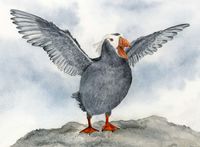
Tufted Puffins are threatened by sea level rise and storm surges which destroy habitats and breeding areas. In some areas of North America warming seas are causing the fish that the Puffins feed on to migrate farther north, making it difficult for them to find adequate food. Other threats are entrapment in fishing nets, oil spills, pollution, ingestion of plastic, human disturbance of breeding colonies and introduced predators such as rats and foxes.
Tufted Puffins are threatened by sea level rise and storm surges which destroy habitats and breeding areas. In some areas of North America warming seas are causing the fish that the Puffins feed on to migrate farther north, making it difficult for them to find adequate food. Other threats are entrapment in fishing nets, oil spills, pollution, ingestion of plastic, human disturbance of breeding colonies and introduced predators such as rats and foxes.
Staghorn Coral
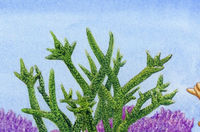
In the last 30 years the Staghorn Coral population has decreased by 80% from disease, pollution, development and damage. Climate change is increasing the risk of extinction. Corals live in symbiotic (mutually beneficial) relation with algae. The coral receives nutrients and oxygen from algae, and the algae receive nutrients and carbon dioxide from the coral. Rising sea temperature increases algae growth so oxygen levels become too high for the coral, causing "bleaching"—the coral expels the algae and dies. Higher ocean acidity contributes to bleaching and also reduces the ability of corals and other marine animals to build hard shells. Other threats from climate change are sea level rise, changes in currents and storm damage.
In the last 30 years the Staghorn Coral population has decreased by 80% from disease, pollution, development and damage. Climate change is increasing the risk of extinction. Corals live in symbiotic (mutually beneficial) relation with algae. The coral receives nutrients and oxygen from algae, and the algae receive nutrients and carbon dioxide from the coral. Rising sea temperature increases algae growth so oxygen levels become too high for the coral, causing "bleaching"—the coral expels the algae and dies. Higher ocean acidity contributes to bleaching and also reduces the ability of corals and other marine animals to build hard shells. Other threats from climate change are sea level rise, changes in currents and storm damage.
The Black-footed Albatross is at risk from climate change because of:The Black-footed Albatross is also threatened by: